What this service covers
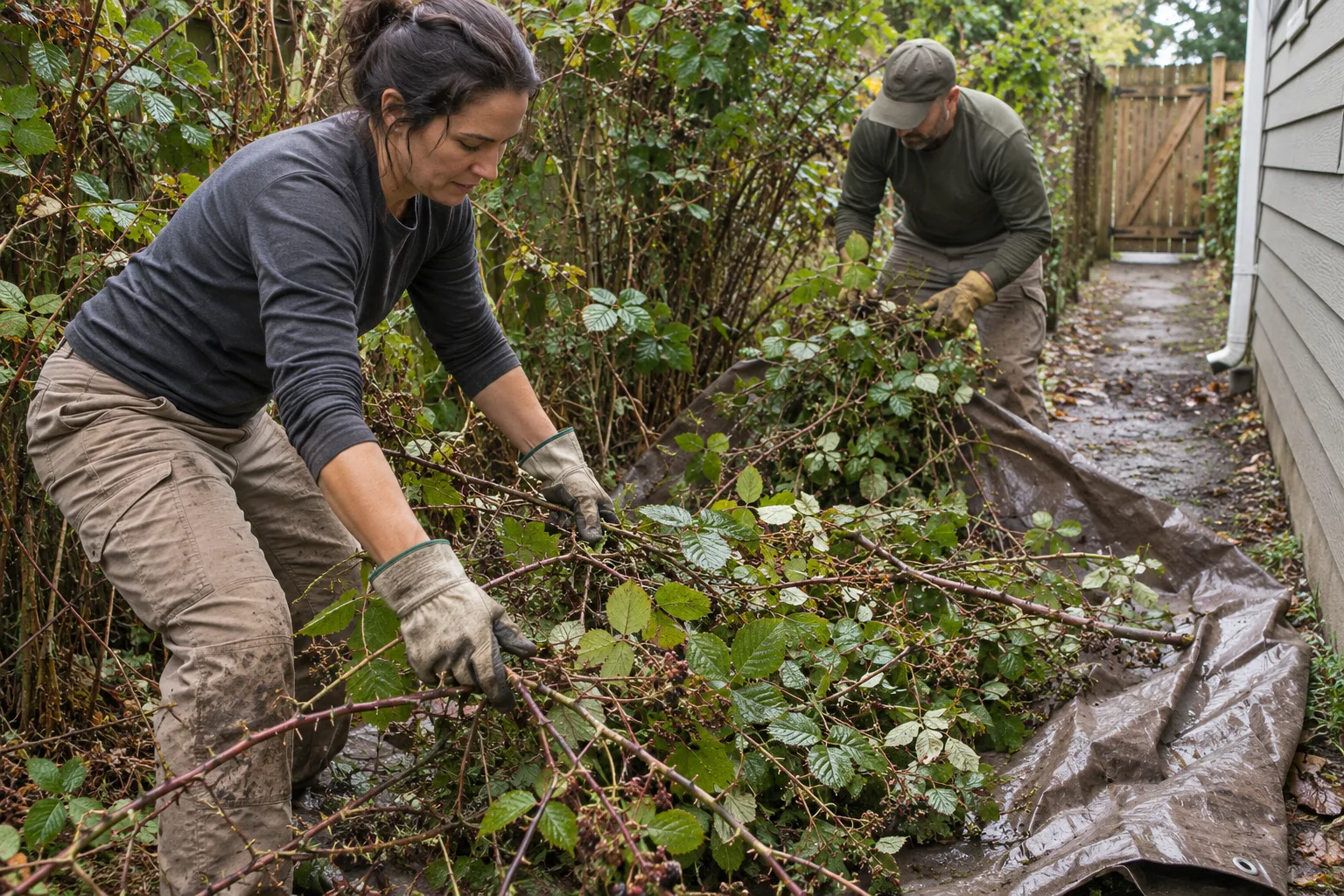
Brush can hide wire, pots, stakes, soil, or trash. Separate those materials when you can and point out anything sharp.
Call with wide photos and a clear description. Acceptance depends on the actual material, size, condition, access, and destination requirements. Do not mix chemicals, liquids, dangerous waste, or unknown containers into a yard-debris pile.
Prepare the job without overworking it
A visible gate, side-yard width, slope, and distance to the loading point help define the job.
- Show the entire pile from more than one angle.
- Measure the narrowest gate and identify stairs or slopes.
- Separate soil, rock, plastic, wire, pots, and household material.
- Keep pets and children away from the work route.
Estimate factors
Volume is only one factor. Wet material can be dense, long limbs can need different handling, and a backyard carry can take more work than a driveway pile. The scope and price should be confirmed before loading begins.
Local disposal context
King County lists branches, brush, grass, leaves, plants, and wood rounds as yard waste, with facility restrictions on contamination and piece size. Kent also provides green-cart service and seasonal curbside cleanups with separate bundling, size, and weight rules. Check the current public program when your pile may qualify.
Questions about brush removal
What belongs in a yard debris load?
Describe leaves, weeds, brush, branches, grass, plants, or wood rounds. Soil, sod, rock, plastic, metal, household trash, treated wood, chemicals, and mixed construction debris need separate review.
Do I need to move everything to the curb?
Ask when you call. Explain where the pile sits and how it can be reached. Gate width, steps, slope, soft ground, and carry distance can affect the plan.
How is an estimate prepared?
Pile volume, material type, density, access, handling needs, and location all matter. Wide photos help, but the final scope must be confirmed before loading.
Can you take debris after a storm?
Detached debris on safe ground can be reviewed. Stay away from utilities, unstable trees, floodwater, and public-road hazards, and contact the responsible authority first.